 Indonesia
 English

Background
The current era of globalization and free trade presents increasingly complex challenges for industry and commerce, requiring enhanced competitiveness and greater operational efficiency. Human resources, as a fundamental asset for national development, have become an essential and strategic priority at both the national and international levels. Consequently, effective and efficient management, supported by advanced technology, modern facilities, and appropriate infrastructure, has become indispensable in addressing these challenges.
Many industrialized countries are experiencing an increasing demand for skilled and highly qualified professionals due to rapid transformation across various sectors, particularly in industry. In contrast, Indonesia continues to produce millions of graduates annually from primary schools, junior secondary schools, senior secondary schools, and universities. Nevertheless, many graduates have yet to acquire the professional competencies, technical expertise, and workplace readiness required to meet the demands of today's dynamic employment market.
In anticipation of future trends and the increasing demand for competent human resources, particularly in Indonesia, Batam must cultivate capabilities that are aligned with the evolving needs of industry and employment. As a strategically integrated development region, Batam is expected to:
Become a region capable of competing successfully in the global marketplace;
Serve as Indonesia's international gateway by developing high-quality infrastructure and human resources equipped with global perspectives, professional competence, and technical expertise;
Establish itself as an internationally competitive center for manufacturing, trade, services, and tourism comparable to Singapore and other neighboring countries.
To respond effectively to these developments, a dynamic University that embraces globalization must provide educational programs that meet both national and international standards. Such a university must also establish competitive partnerships with leading universities around the world to strengthen academic quality, institutional competitiveness, and international collaboration.
Establishment History
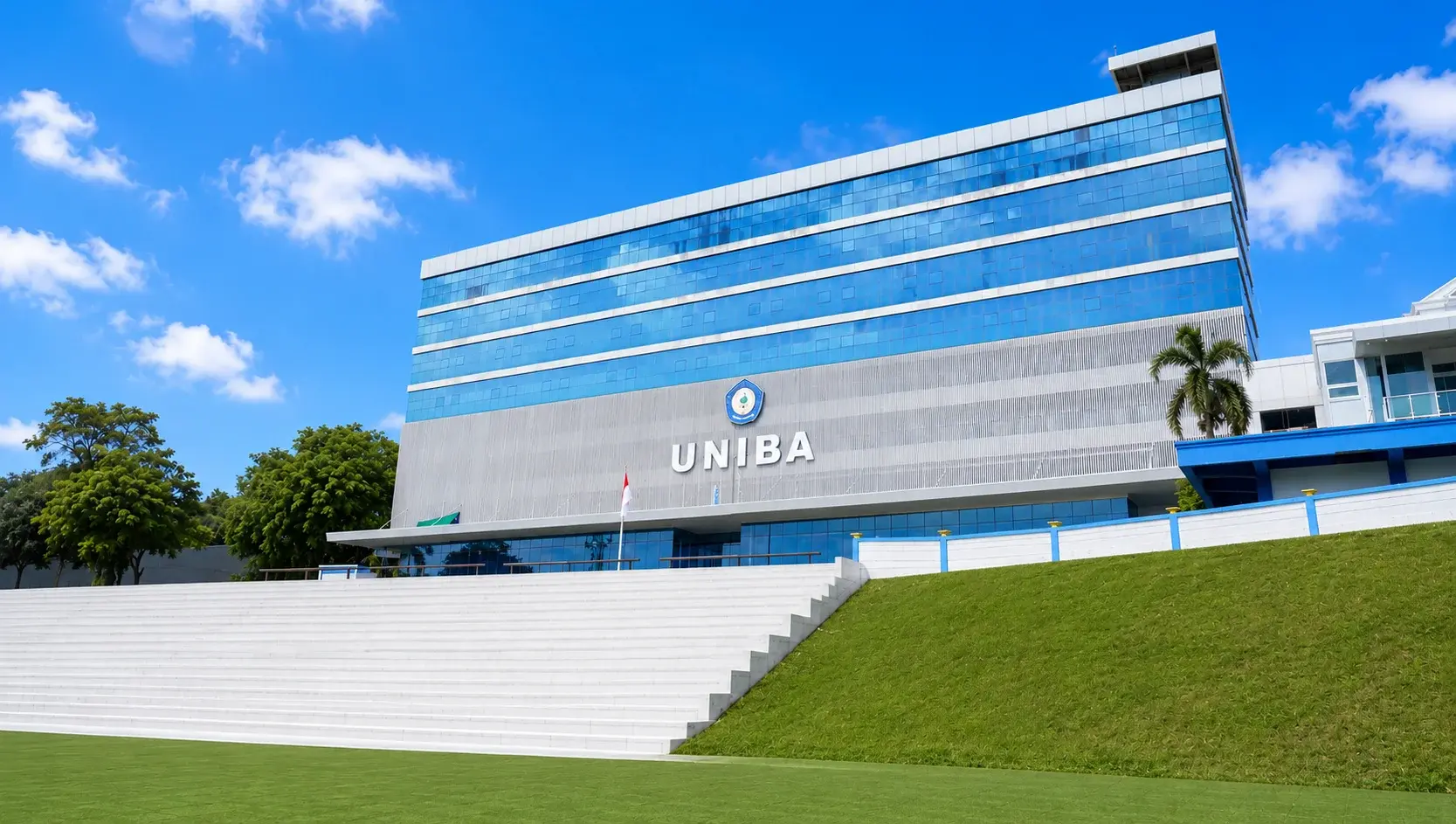
The establishment of Universitas Batam reflects the vision and commitment of the Griya Husada Foundation to contribute meaningfully to the advancement of higher education in Indonesia. Recognizing the growing need for a university capable of producing highly qualified professionals, the Foundation initiated the establishment of an institution dedicated to academic excellence, professional development, and community service.
The University was originally founded as Universitas Abulyatama under the Establishment Decree issued by the Director General of National Education of the Republic of Indonesia (No. 58/D/O/2000). A significant milestone in its history was the groundbreaking ceremony for the main campus on 30 May 2000, officiated by Dr. Satryo Soemantri Brodjonegoro, then Director General of National Education, in the presence of Dr. H. Rusli Bintang, Chairman of the Griya Husada Foundation.
The institution was officially inaugurated on 26 January 2001 by Dr. A. Yahya Muhaimin, Minister of National Education of the Republic of Indonesia, marking the beginning of Universitas Batam's contribution to the development of higher education and human capital in Indonesia.
To better represent its strategic role in supporting the development of Batam as an international industrial and commercial city, the institution was officially renamed Universitas Batam pursuant to the Decree of the Director General of Higher Education No. 242/D/O/2001, dated 16 November 2001, following the recommendation of the Regional Coordinator of Private Higher Education (Region X).
Under the leadership of Prof. Dr. Ir. H. Novirman Jamarun, M.Sc., Universitas Batam continues to strengthen its position as a university committed to academic quality, institutional innovation, and continuous improvement. The University has consistently enhanced its governance system, academic programs, learning environment, human resources, and educational infrastructure to ensure that its graduates are well prepared to meet the challenges of an increasingly competitive global society.
Beyond its pursuit of academic excellence, Universitas Batam upholds a strong commitment to social responsibility. The University actively promotes equitable access to higher education by supporting orphans and students from economically disadvantaged backgrounds, particularly those from Batam and the surrounding regions. This commitment reflects the University's belief that quality education should serve not only as a means of intellectual development but also as a catalyst for social inclusion, community empowerment, and sustainable national development.